
Conus rolani – Species Splash
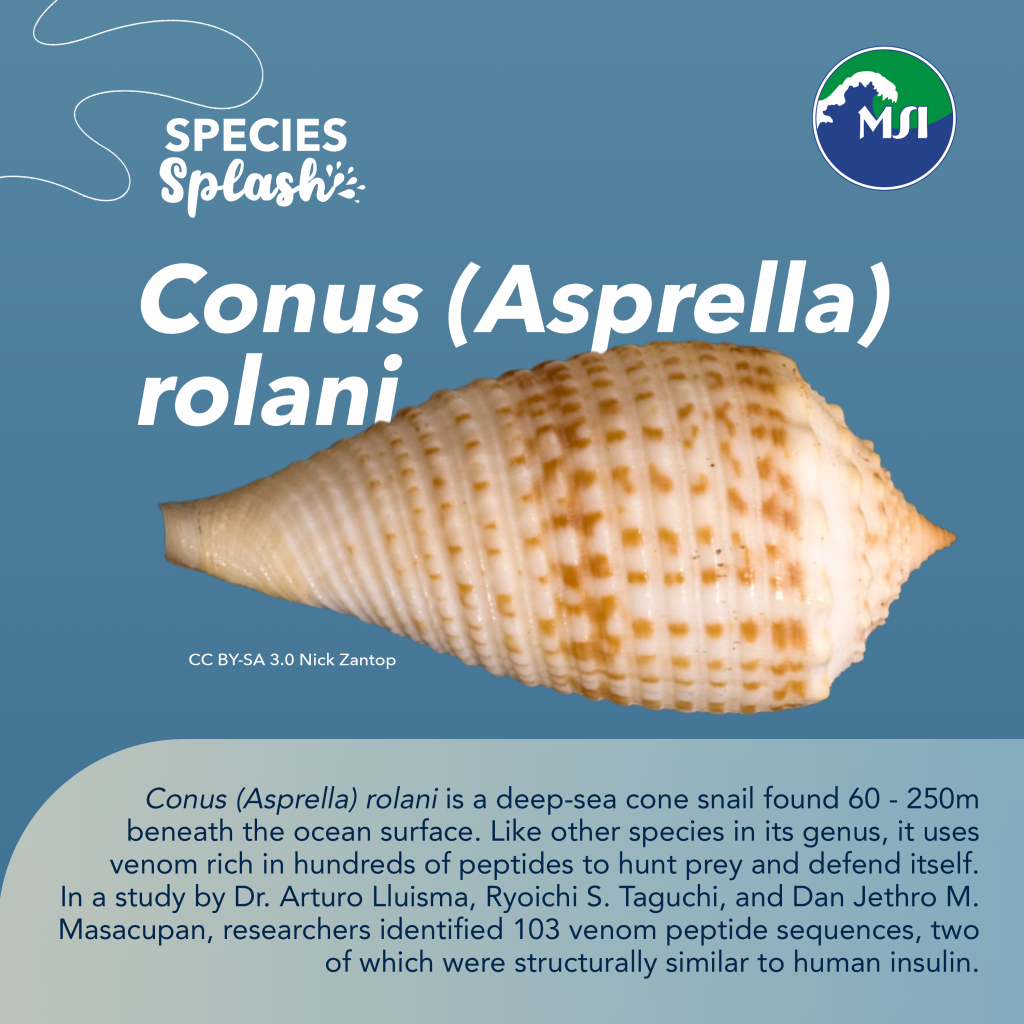
Mapanganib man sa iyong paningin, pero nakakagaling din! 😎
The Conus rolani (cone snails) may look small, but don’t underestimate them—they’re members of the Conus genus, the largest group of marine invertebrates with over 800 known species. Typically found in deep-water habitats (60 – 250m), these snails use venom packed with hundreds of peptides to hunt and defend themselves. However, C. rolani and the Asprella group remain understudied.
Intrigued by this, UP MSI Professor Arturo Lluisma, PhD, together with Ryoichi S. Taguchi and Dan Jethro M. Masacupan, with the help of the DDHP team, studied the venom of C. rolani collected from Sogod, Cebu. Using high-throughput RNA sequencing, they uncovered 103 potential venom peptide sequences from 36 gene superfamilies, an incredible variety for such a tiny creature!
Based on their structures, many of the peptides looked like they could target a wide range of receptors, and so it was likely that they could set off very specific effects. Two of these peptides were structurally similar to human insulin. One was similar to R7a, a peptide that reportedly put mice to sleep. Eight of them did not match other cone snail peptides at all, and remain a mystery to be uncovered.
Overall, the results show that the peptides may be likely candidates for chronic pain treatment. This study marks the first genomics-guided exploration of venom from deep-sea cone snails, which is an exciting first step toward unlocking their pharmaceutical potential.
Dive deep into the full paper here: https://doi.org/10.54645/202417SupQCH-42