
A Study in Blue: Field Notes from the West Philippine Sea
by Lorenz Cajilig
They say happy accidents make the best paintings – and in this case, they did. Being part of an expedition was not part of my original plans for a thesis topic.
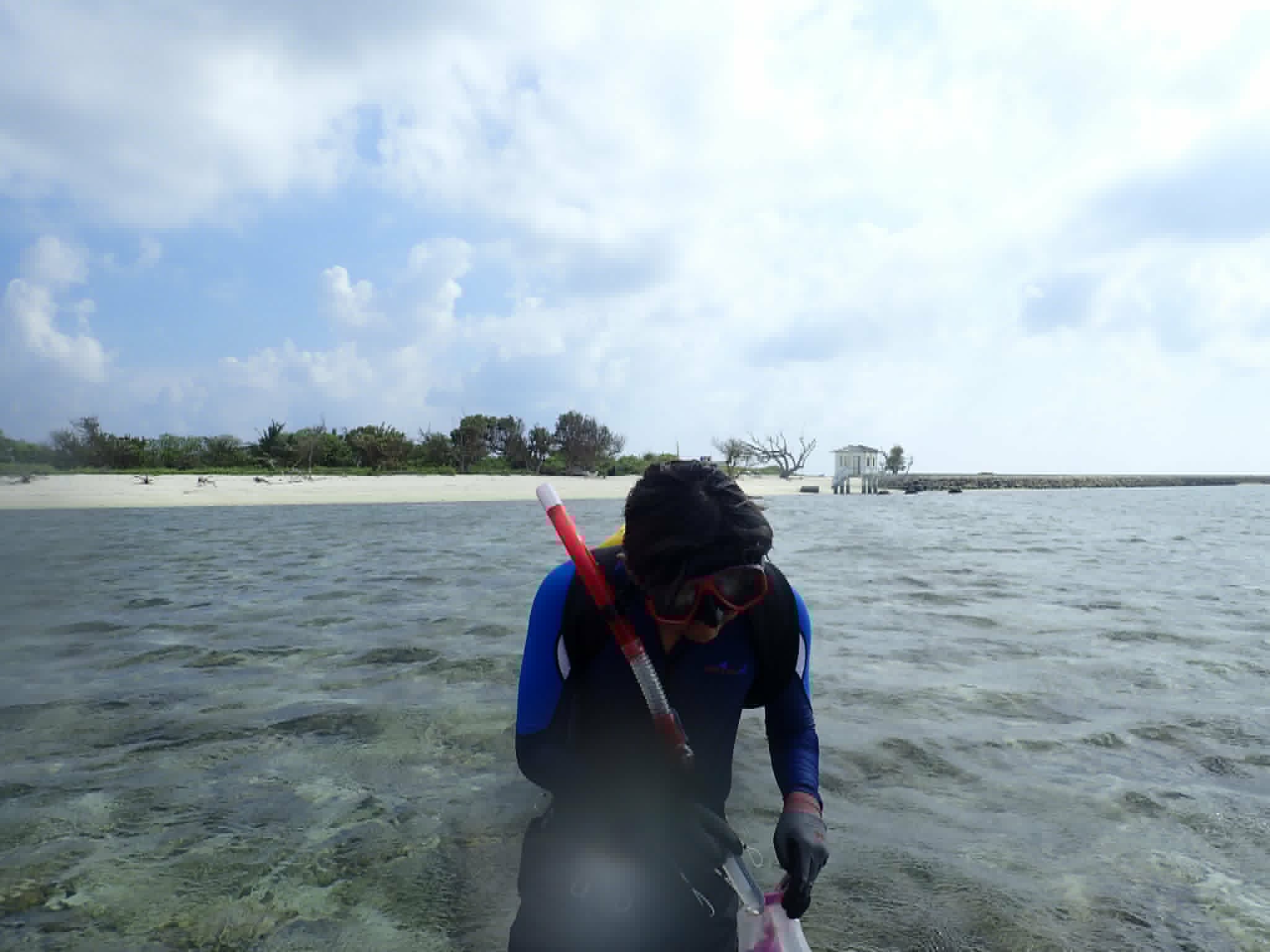
Earlier this year, I joined a field survey on Pag-asa Island in the Kalayaan Island Group. At first, it felt like a practical decision: collect samples under a funded project, gain experience, see cute invertebrates – it made perfect sense on paper. But as the days grew closer, that practicality shifted into something else. What felt convenient became something I genuinely looked forward to. It was no longer just a decision – it was stepping into a space I had only encountered through lectures, news, and papers.
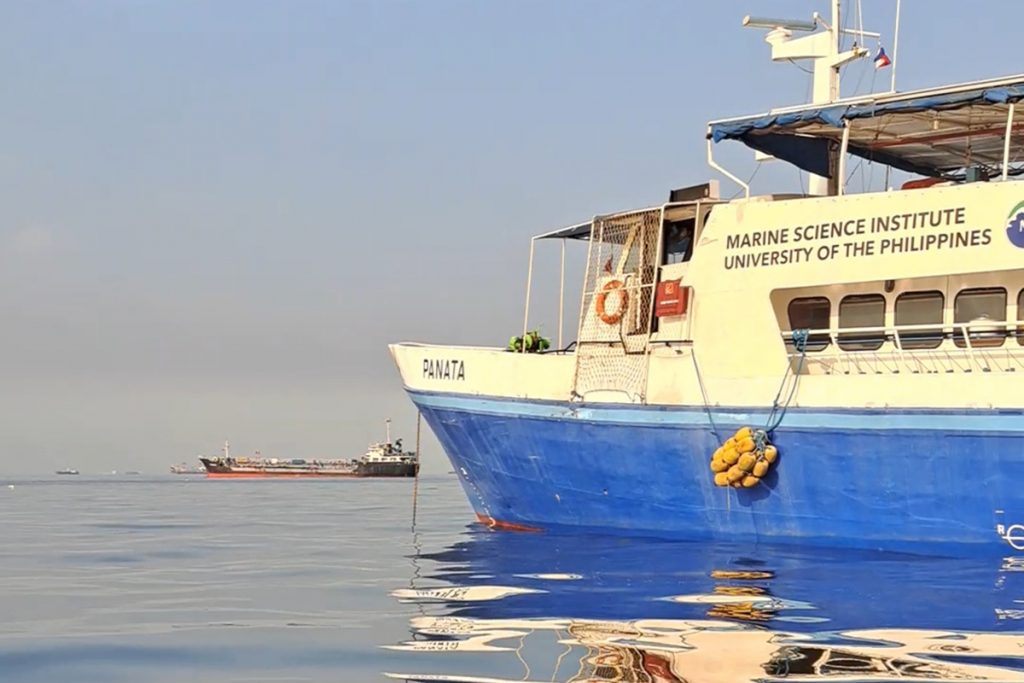
Boarding the research vessel MV Panata, science felt less like theory and more like movement. The constant rocking of the currents, the deck filled with seafarers, oceanographers adjusting instruments – everything carried a sense of purpose. Even at Navotas Port, it was clear how much had to come together just to begin. Curiosity alone doesn’t get you this far.
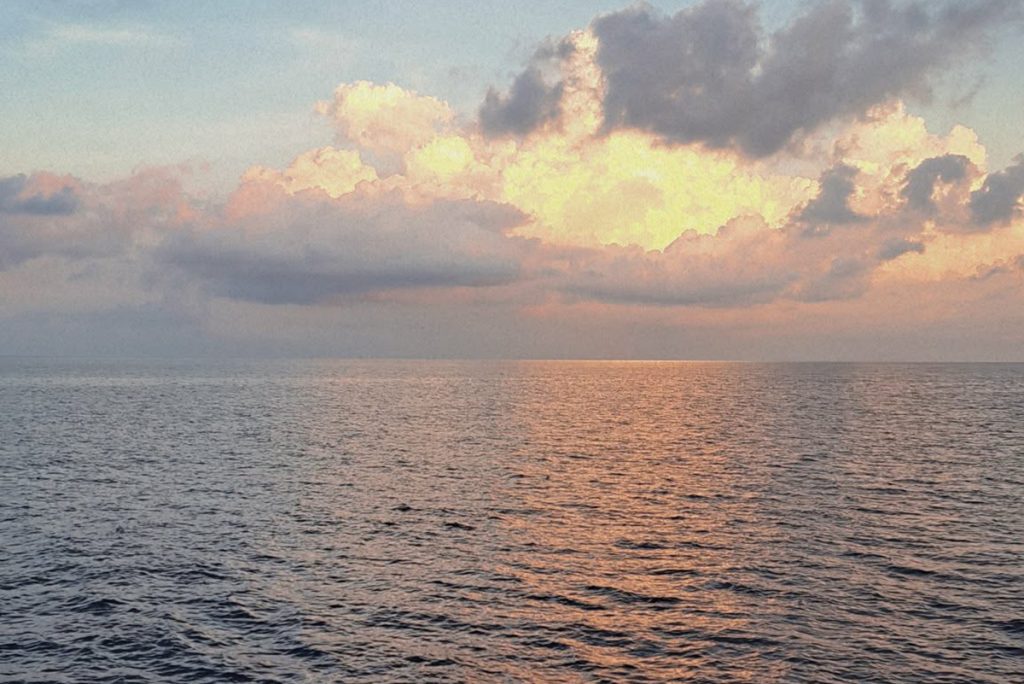
As our ship traversed the West Philippine Sea, the idyllic horizon opened up; Filipino boats fishing their day’s worth while dolphins seemed to greet us – making you realize how much our waters have to offer. In this symphony, watchful vessels punctuated from a distance – a quiet reminder that these waters are not only ecological systems, but spaces of history, tension, and claim. Still, the work continued.
After a day and a half at sea, Pag-asa came into view. Clouds finally welcomed us, signalling the first sight of land after what seemed eternity. What followed was both wonder and realization. The reef stretched wider than expected, complex enough that seagrasses grew alongside coral colonies, forming a living mosaic beneath us. From above, it looked like a composition not yet fully understood – patterns without labels, structure without explanation.
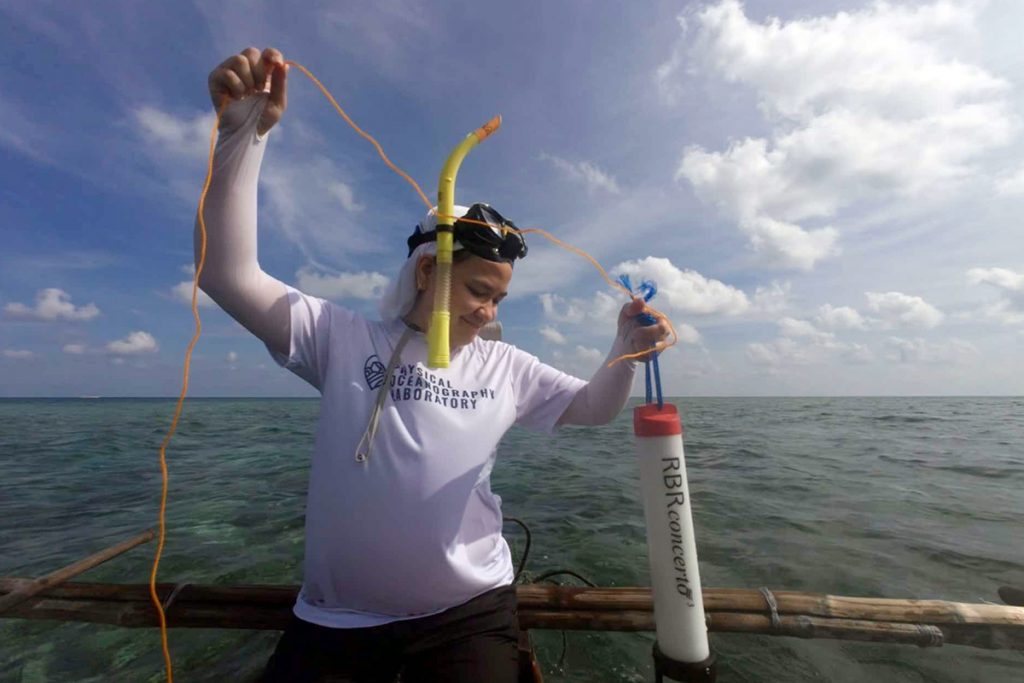
We were then transported to the station by the Philippine Navy, and from then on, everything followed the rhythm of the field. Plans adjusted, but always within method. The ocean dictated the schedule and work needed to be done. Days settled into movement. Teams dispersed across the island: oceanographers surveying, reef teams diving, geologists mapping, and us, the invertebrate team, collecting life hidden beneath rubble, including my thesis species, blue corals. By afternoon, buckets of samples returned to the station. Identification became discussion, and discussion became collaboration. For a moment, the complexity of the reef felt shared rather than overwhelming.
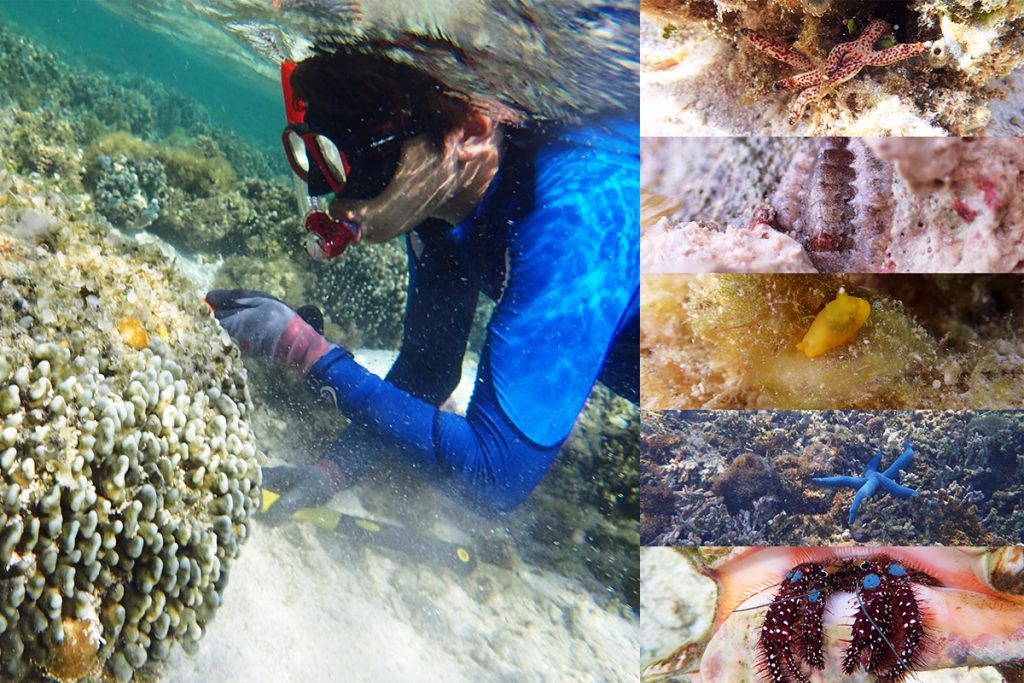
Evenings brought reflection. Discussions expanded from data to history – how disputes had already altered what was once a pristine system. It raises a quiet question: why something so vital remains under-supported. These resources are changing, sometimes lost, before they are fully understood. That realization stays.
Being there made one thing clear: these reefs are not distant abstractions. They are immediate, lived systems, tied to people and places. The work may be slow, constrained, and incomplete – but it matters.
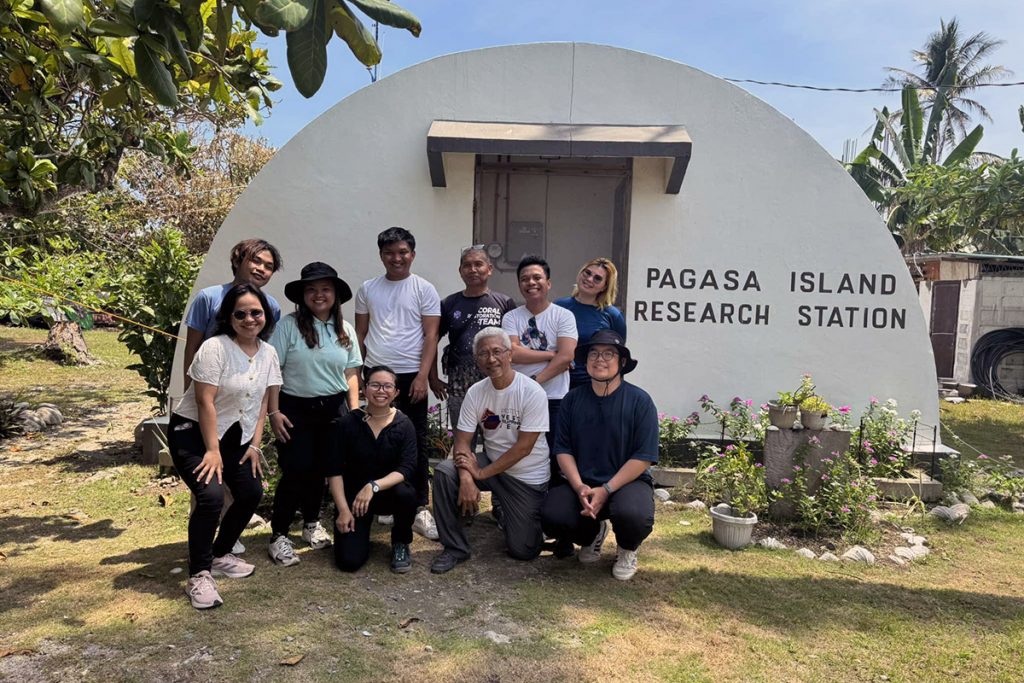
As the plane left Pag-asa, the experience carried more weight. What began as convenience became something else entirely – an entry point into the kind of work worth continuing.
The ocean is never just blue – it remains a mosaic of movement, a canvas of unanswered questions. This time, though, I’m no longer just observing. I’m part of the process.
Lorenz Cajilig is an MS Marine Science (Marine Biology) student with a BS in Biology, with an interest in marine invertebrates and biogeography. Their work aims to uncover the hidden diversity of marine life through science and bring these discoveries to life through storytelling.