
Still in the Philippines, Still at Home
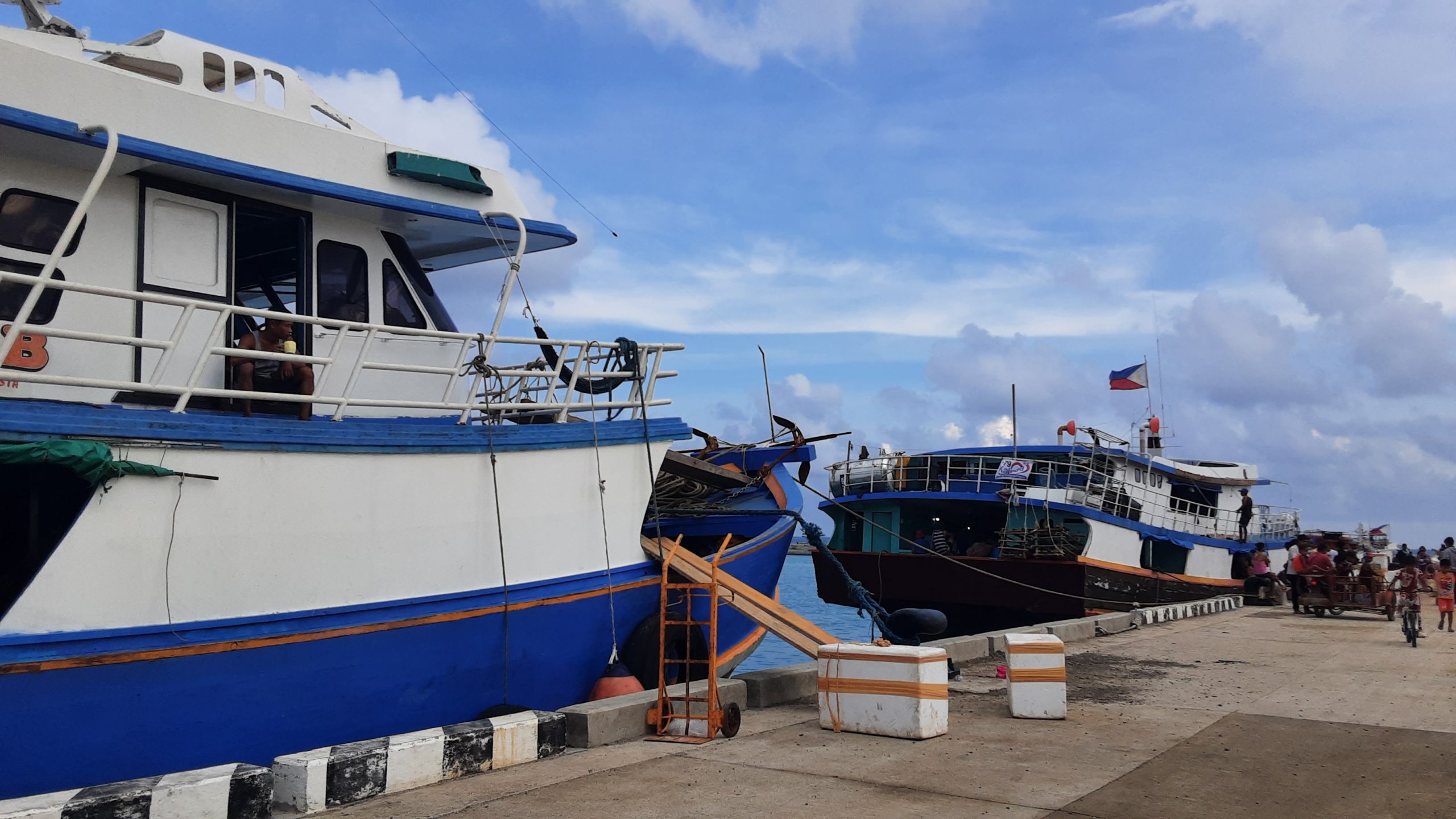
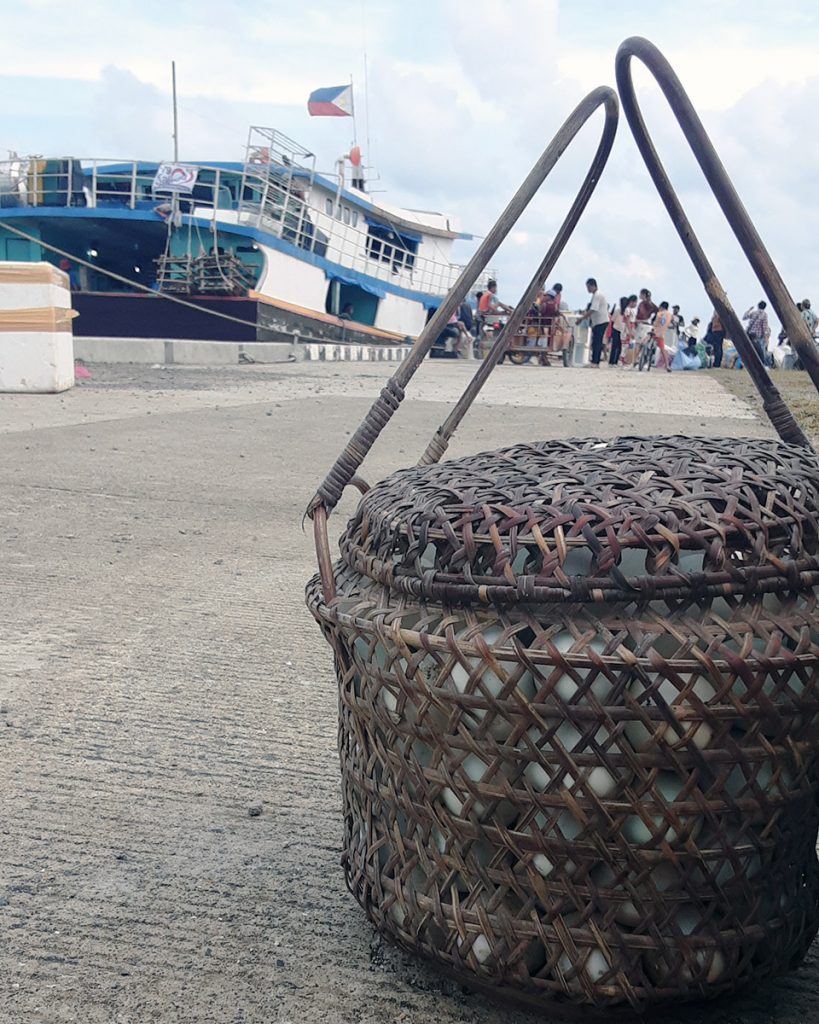
FEATURED PHOTO: Visitors from Buliluyan Port, Bataraza, Palawan arrive in Pag-asa Island to take part in the island’s annual fiesta.
by Dr. Gizelle A. Batomalaque
Opinions expressed in this article do not reflect the opinions of the UP Marine Science Institute.
There is a theory in psychology that posits that people perceive objects (i.e., people, places, events) more abstractly when these objects are more distant from the person, whether it be physical, temporal, or social distance (see Keller et al., 2022). Pag-asa Island—the people in it and the actual island—has been in the news for several years now, yet it may be perceived as an exotic place by the average Filipino, if it ever crosses their mind. The island and others that comprise the Kalayaan Island Group (KIG) is often discussed in the context of geopolitical affairs, which can inadvertently alienate the average Filipino, such that one forgets (or does not realize) that civilians—fellow Filipinos—live their everyday lives on Pag-asa Island. Here I present glimpses of the island’s locals and a synthesis of reflections by fellow researchers and myself on community and connection.
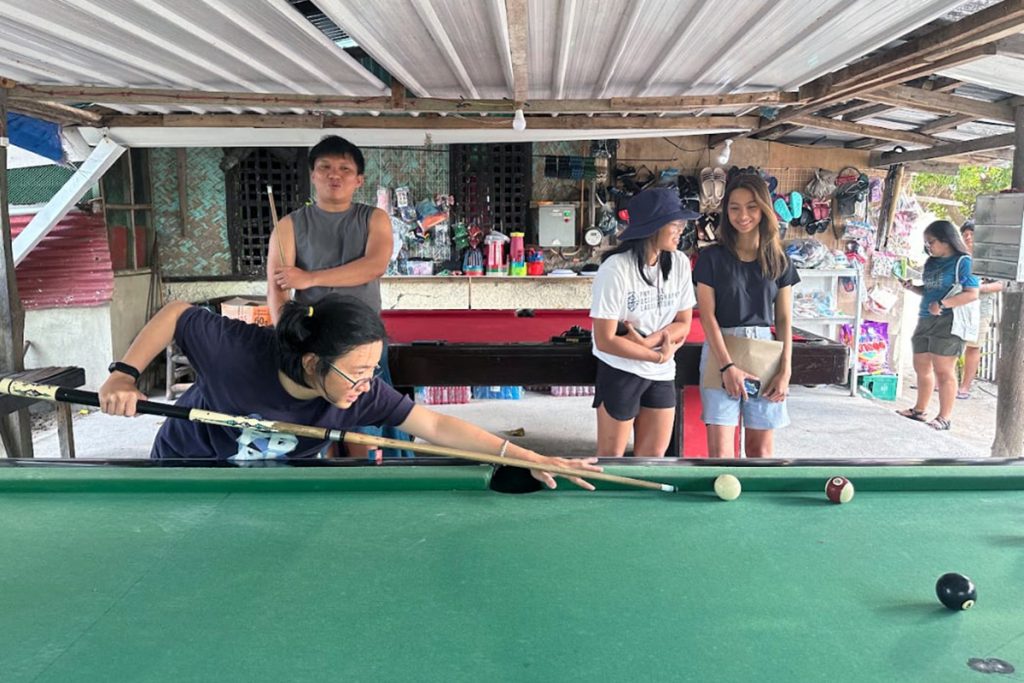
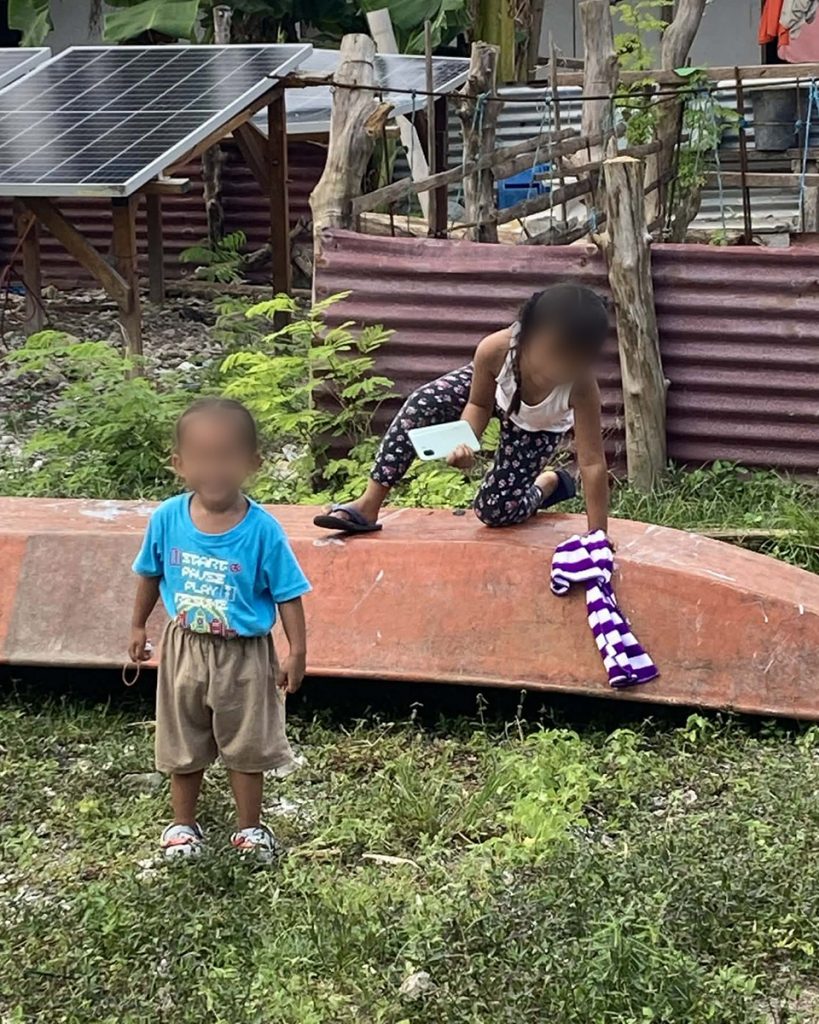
Our research team bunked at the Pag-asa Island Research Station (PIRS), which was at the opposite direction from where the civilian community is situated. Though fieldwork—data gathering, specimen processing—occupied the bulk of our time on the island, we had our share of interactions with the locals. Among the locals we interacted with everyday were Yam and Rose , who prepared our meals, and Raddy and Raymond , who are the caretakers of PIRS. Through conversations with Yam and Rose, we learned that the community has observed continuous declines in both fish catch and gleaned invertebrates (e.g. sea cucumbers, sea snails). At times, Yam’s children tagged along—they would observe the researchers process samples and often play with the other researchers. Other curious youths dropped by from time to time, asking about what we were doing and bringing us treasures from the beach. Raffy and Raymond did the hardware work, such as installation of new solar panels, setting up the work stations for processing samples, and assisting in instrument deployment. Raffy is a fisherman, and his boat and services were helpful when teams had to split to cover different sites. On the other hand, Raymond’s kolong-kolong (motorcycle with a sidecar) allowed us to transport supplies (e.g. jugs from the island’s communal water refilling station) and heavy equipment. These are common experiences when one does fieldwork in remote parts of the country, whether in islands or in mountains—warm and helpful locals, curious children, stories of resource decline. There were pleasant surprises, which at first seemed unexpected but made much sense after some thought. For one, the elementary school principal told us that their dropout rate is zero, and students have almost zero absences. Commerce also seemed to be faring well as sari-sari stores lined one of the main streets. Furthermore, our team got wind of a chat group where locals used mainly as an online neighborhood marketplace and occasionally to announce travel advisories and air grievances (e.g., a stolen water jug). Through the chat group, we bought donuts, leche flan, and fresh octopus—the first two dishes, one rarely gets to eat when conducting fieldwork. Goods were either delivered to us in PIRS or we had to pick them up at the seller’s residence. The latter was better as it allowed us to see more of the residential areas, with no house numbers but with everyone you asked knowing where who lived. In a way, these made us feel like we were not on an isolated island, thousands of kilometers from the Palawan main island.
This familiarity is comforting because it breaks down pre-conceived ideas of exoticism of the place and the people. Our interactions and observations with the locals made us realize that island life has parallels, whether you are in Pag-asa, It-bayat (Batanes), Balut (Sarangani), or any small island in the Philippines. Not to invalidate security concerns, but taking aside the geopolitical backdrop, the residents of Pag-asa Island show the [natural] tendency of humans to self-organize and make the most out of their situation.
Reference:
Keller, A., Marsh, J.E., Richardson, B.H. & Ball, L.J. (2022). A systematic review of the psychological distance of climate change: Towards the development of an evidence-based construct. Journal of Environmental Psychology, 81, 101822.
Dr. Gizelle A. Batomalaque is a university researcher at the UP Marine Science Institute. She is an advocate of improving biodiversity awareness and science literacy in the country.