UP MSI, Kalayaan LGU, partners lay groundwork for Pag-asa Island MPA in Roundtable Summit
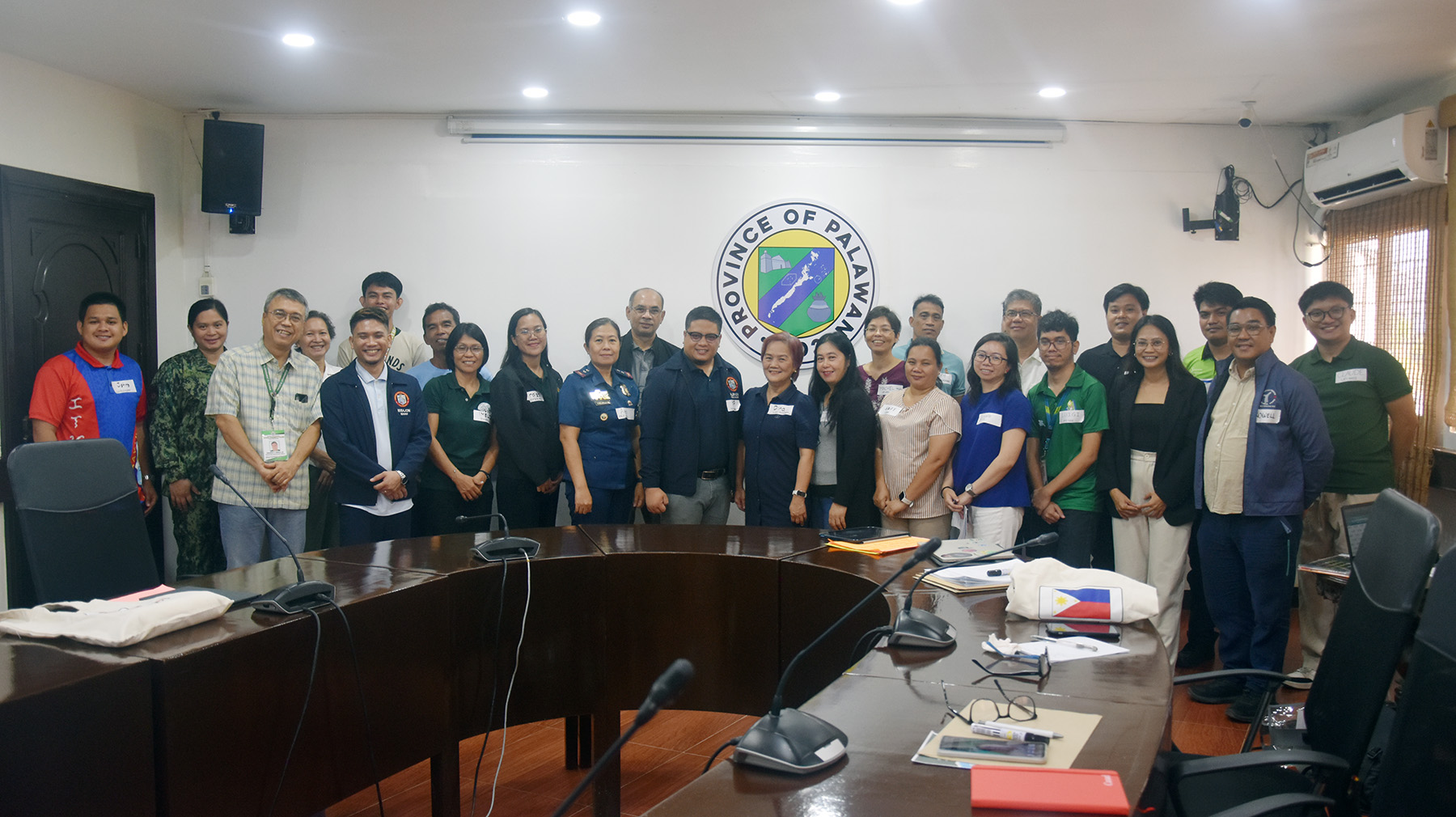
FEATURED PHOTO: The Roundtable Summit Participants and Organizers. (Left to Right) Jetro M. Desabayla, Pcpl. Carlita G. Arzaga, Edgardo C. Zabala Jr., Bella Sheila L. Albasin, Junry S. Alindogan, Nerben D. Salazar, Jose M. Mazo, Imelda S. Mazo, Eraiza Kim B. Sese, Pcpt. Anna Viola M. Abenojar, Willy B. Ortega, Vice Mayor Maurice Phillip Alexis S. Albayda, Dina M. Balofinos, Reajam B. Moral, Dr. Maria Celia D. Malay, Azucena E. Gamutia (front), Junry R. Alindogan (back), Dr. Gizelle A. Batomalaque, Dr. Roger G. Dolorosa, Luigi Y. Lubrio, Arjay T. Gregas, Leah Marie C. Mahomoc, Sanny A. Nedroda, Rowell C. Alarcon, and Claude Michael G. Salva.
by Leah Mahomoc
At the frontlines of the West Philippine Sea, where ecological importance intersects with national interest, stakeholders convened to chart a science-driven path toward conservation during the Roundtable Summit on Pag-asa Island Biodiversity and Marine Protected Area.
Held at the Provincial Capitol in Puerto Princesa City on April 7, 2026, the summit brought together representatives from key government agencies, the academe, conservation organizations, and uniformed personnel to advance plans for establishing a Marine Protected Area (MPA) in Pag-asa Island.
The event opened with welcome remarks from Hon. Maurice Phillip Alexis S. Albayda, Vice Mayor of Kalayaan, who framed the summit as both a scientific and national undertaking. He described the effort as “an act of resilience,” emphasizing that the gathering represents a space “where science meets sovereignty, and where policy meets purpose”.
In her opening remarks, Dr. Maria Celia D. Malay of the University of the Philippines – Marine Science Institute (UP MSI) posed a challenge for the summit: “Ano ang gusto nating makamit at ano ang gusto nating mabigyang-linaw?” (What do we aim to achieve, and what do we seek to clarify?). She emphasized the importance of defining concrete outcomes and strengthening partnerships among stakeholders, while ensuring that the perspectives of the Kalayaan local government remain central to the process.
Establishing a Science-based Sanctuary
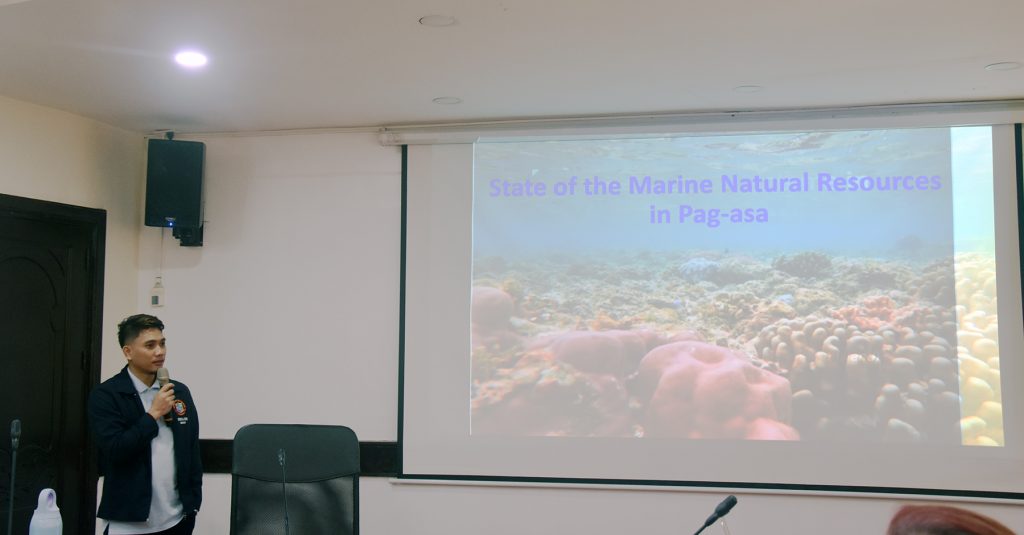
A key highlight of the summit was the presentation on the state of marine and coastal resources in Pag-asa Island by the Kalayaan Municipal Environment and Natural Resources Officer (MENRO) – Designate, Mr. Jorge Olean M. Misajon. Drawing from studies conducted by the academe and various government agencies, the presentation outlined both the value and current challenges of the island’s ecosystems.
In response to the increasing pressures threatening the sustainability of the resources of Pag-asa Island, the Municipality of Kalayaan has implemented a range of environmental management initiatives. Central to these efforts is the proposed establishment of a Marine Protected Area (MPA) on the northeastern portion of the island. The proposed MPA includes a 42-hectare core zone and a 13-hectare buffer zone. The initiative is grounded in years of scientific research, including studies conducted by UP MSI, Western Palawan University (WPU), and partner government agencies. The proposed site falls within the Environmentally Critical Areas Network (ECAN) zones established by the Palawan Council for Sustainable Development. Consultations with the local community are on-going as part of the process.
Strengthening Governance and Policy Support
Representatives from provincial agencies presented complementary programs and policy directions supporting coastal and marine resource management in Pag-asa Island and the broader Kalayaan Island Group (KIG). These include fisheries programs for the province of Palawan presented by Nerben D. Salazar (Provincial Agriculture Office); plans and projects for the KIG by Eraiza Kim B. Sese (Bureau of Fisheries and Aquatic Resources – Provincial Fishery Office); Kalayaan Environmentally Critical Areas Network (ECAN) zones by Dan Clark Bacani (Palawan Council for Sustainable Development); and the marine scientific stations in Palawan by Sanny A. Nedroda (Department of Environment and Natural Resources – Palawan).
Integrating Science and Best Practices in Marine Conservation
To guide the island’s path towards conservation and sustainable resource management, the summit brought in resource speakers from across Palawan, showcasing successful models of marine conservation.
Dr. Roger G. Dolorosa of the College of Fisheries and Natural Sciences, Western Philippines University, presented research on invertebrate diversity in Pag-asa Island, emphasizing the importance of sustained monitoring to assess ecological changes before and after the establishment of a marine protected area.
Complementing this, Ms. Bella Sheila L. Albasin of the MPA Support Network highlighted the significance of the Kalayaan Island Group being the largest Marine Key Biodiversity Area (MKBA) of the country, underscoring the need for science-based planning and strengthened conservation and management strategies to protect this biodiversity-rich region.
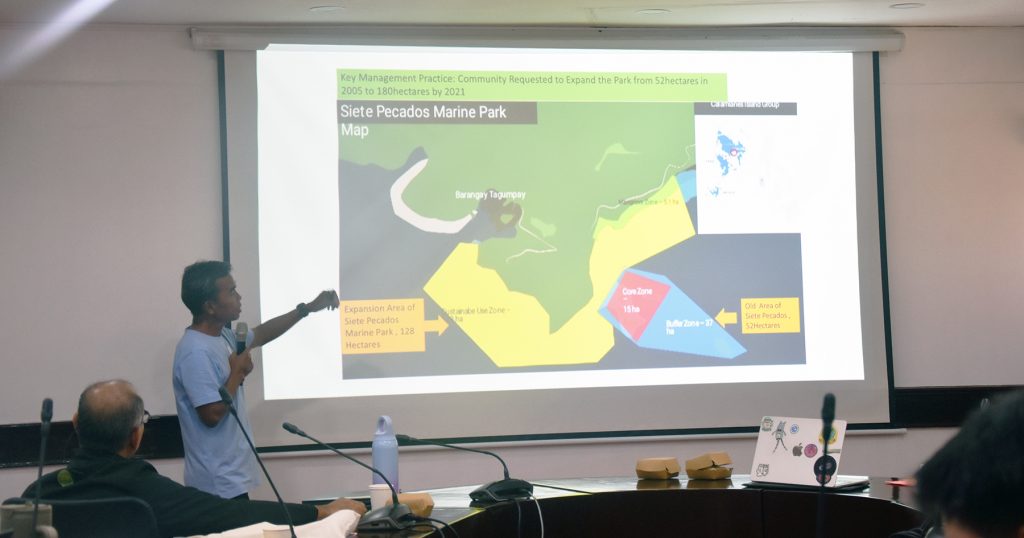
The session was further enriched with presentations from practitioners of locally- to nationally-managed MPAs, providing valuable lessons grounded in experience and implementation.
From Siete Pecados Marine Park in Coron, Park Manager Jose M. Mazo shared how a once-degraded reef system was transformed into a thriving marine protected area now generating millions in revenue. “Sumuntok kami sa buwan,” he said. “Susuntok din kayo sa buwan. Sa idea, sa mga batas, puwede kaming tumulong.” (We reached for the impossible. You can too. In ideas and in laws, we can help.) He highlighted key management practices and success stories that have made Siete Pecados an award-winning MPA that effectively protects biodiversity while sustaining livelihoods in the local community.
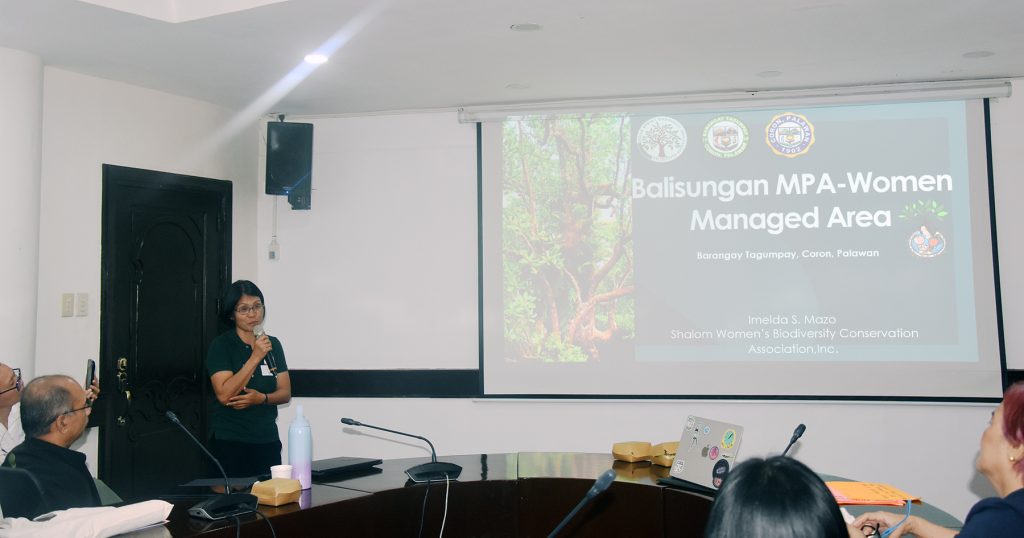
Meanwhile, Mrs. Imelda S. Mazo highlighted the success of a women-led mangrove conservation initiative in Balisungan, Coron, where community empowerment, science-based management, and sustainable livelihood strategies led to improved stewardship of coastal resources. She also presented key management approaches that contributed to increased participation and recognition of women’s leadership, as well as the development of eco-tourism-based livelihoods in the community.
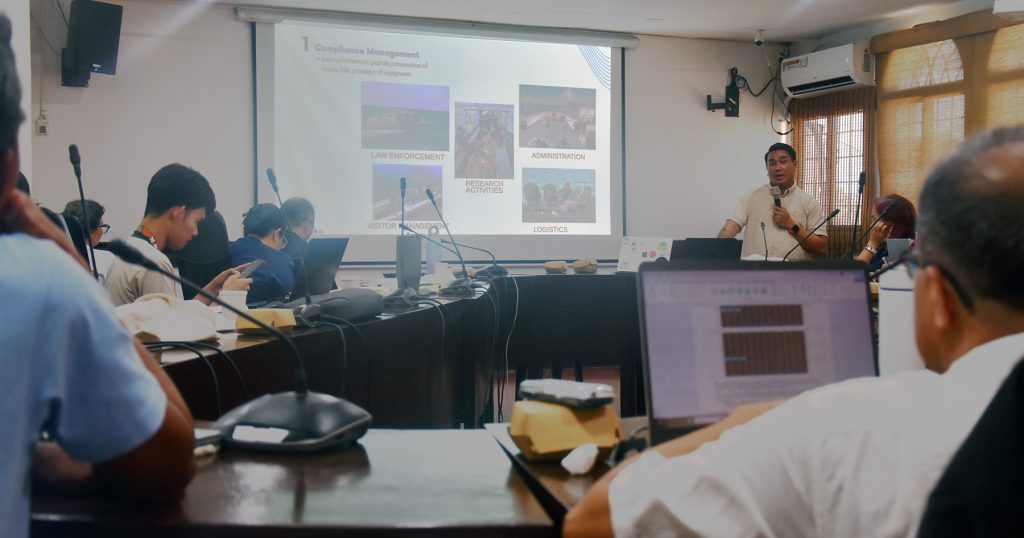
At a national level, Mr. Rowell C. Alarcon of Tubbataha Reefs Natural Park demonstrated how strict protection, backed by legislation and consistent enforcement, can sustain biodiversity in remote environments despite logistical challenges.
Across these examples, a common thread emerged: strong community involvement, science-driven decision making, and sustained institutional support.
Shaping Dialogue into Action Plans
The afternoon breakout sessions translated these lessons into actionable plans for Pag-asa. Participants outlined priorities across four key areas: assessment & monitoring, enforcement, financial & livelihood sustainability, and education & advocacy. Recommendations ranged from establishing regular biodiversity assessments and strengthening maritime patrols, to creating a formal MPA management board and expanding community-based education programs. There were also calls for innovative solutions such as drone surveillance, citizen science initiatives, and partnerships with national and international funding agencies.
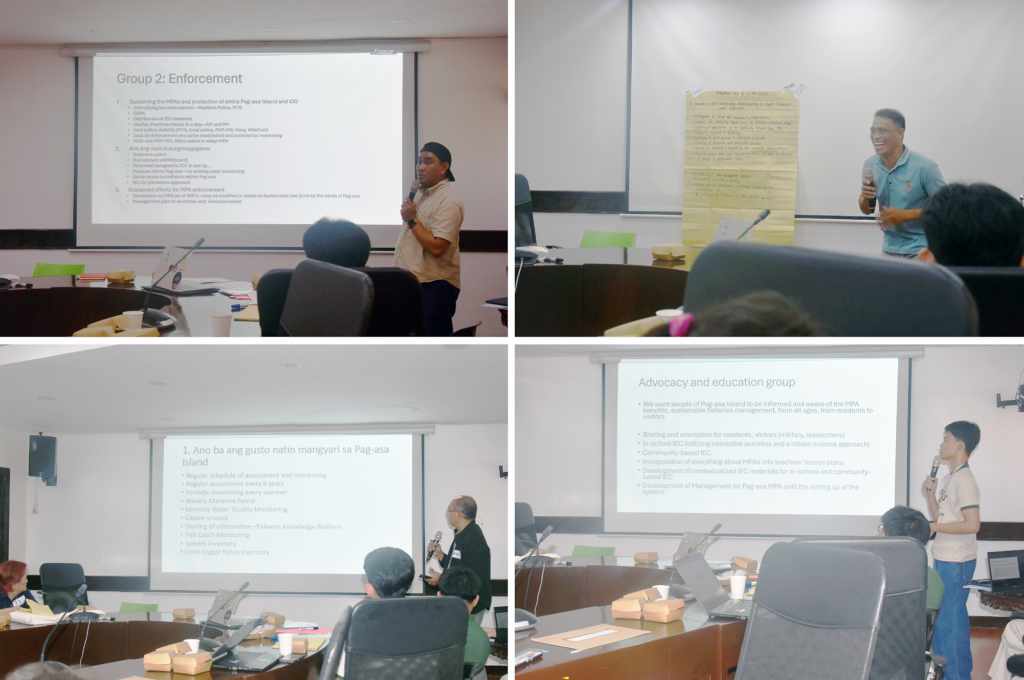
At the heart of these discussions was a shared recognition: the success of the proposed MPA will depend not only on policy, but on people.
As the summit concluded, participants reaffirmed their commitment to advancing the establishment of the Pag-asa Island MPA, not only as a conservation measure, but as a critical step toward sustainable resource management in one of the country’s most important marine regions. In a setting where environmental stewardship is closely tied to national identity, the initiative signals a collective effort to ensure that Pag-asa Island remains both ecologically resilient and sustainably managed for future generations.
The summit is part of the project Strengthening Marine Scientific Research in Pag-asa Island through Biodiversity Assessments, led by Dr. Maria Celia D. Malay, supported by the Canada Fund for Local Initiatives.
Leah Marie C. Mahomoc is an MS Marine Science (Marine Biology) at the University of the Philippines – Marine Science Institute. Her research interests center on seaweed biodiversity and molecular phylogeny.